[et_pb_section fb_built=”1″ admin_label=”section” _builder_version=”4.17.3″ width=”100%” max_width=”100%” global_colors_info=”{}”][et_pb_row admin_label=”row” _builder_version=”4.16″ background_size=”initial” background_position=”top_left” background_repeat=”repeat” global_colors_info=”{}”][et_pb_column type=”4_4″ _builder_version=”4.16″ custom_padding=”|||” global_colors_info=”{}” custom_padding__hover=”|||”][et_pb_image src=”https://weccare-foundation.org/wp-content/uploads/2023/03/bacteria_structure-1.jpg” title_text=”bacteria_structure” align=”center” _builder_version=”4.17.3″ _module_preset=”default” global_colors_info=”{}”][/et_pb_image][et_pb_text _builder_version=”4.17.3″ _module_preset=”default” text_font_size=”15px” global_colors_info=”{}”]
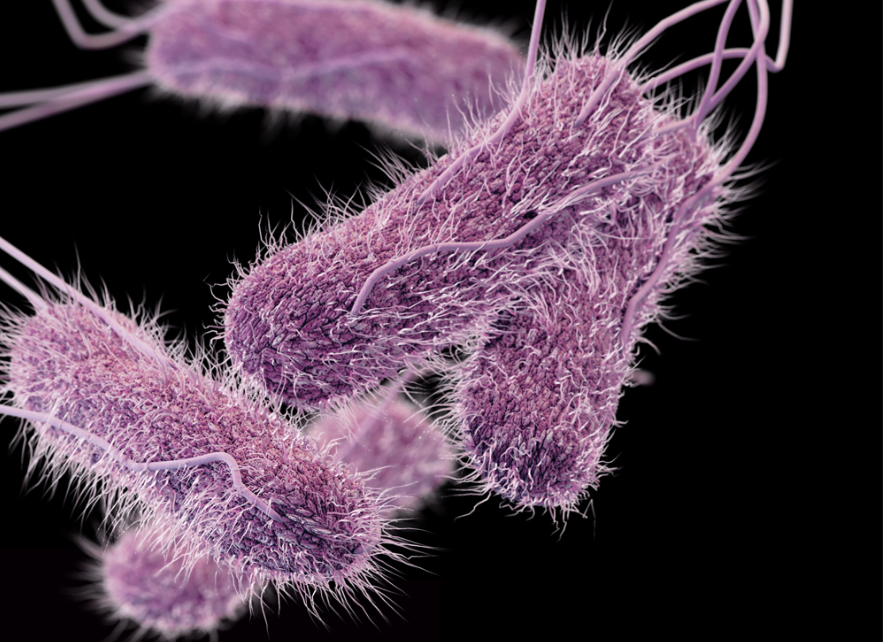
Since 2004, the genus Salmonella has three species: Salmonella enterica, S. bongori and S. subterranea. The main species is S. enterica which includes six subspecies of which the most frequent is S enterica enterica, itself divided into several serovars: dublin, enteritidis, infantis, paratyphi, typhi, typhi murium, virchow, etc
[/et_pb_text][et_pb_image src=”https://weccare-foundation.org/wp-content/uploads/2023/03/Salmonella.png” title_text=”Salmonella” align=”center” _builder_version=”4.17.3″ _module_preset=”default” global_colors_info=”{}”][/et_pb_image][et_pb_text _builder_version=”4.17.3″ _module_preset=”default” text_font_size=”12px” global_colors_info=”{}”]
Salmonella Bacteria as seen under the microscope
[/et_pb_text][et_pb_text _builder_version=”4.17.3″ _module_preset=”default” global_colors_info=”{}”]
Paratyphoid fevers are caused by S. paratyphi A, B and C.
The serological diagnosis of Widal and Felix allows the detection of typhoid and paratyphoid fever caused by certain Salmonella. It is based on the detection in the blood of antibodies directed against these bacteria. It is not very weak and allows only a late diagnosis.
[/et_pb_text][/et_pb_column][/et_pb_row][et_pb_row _builder_version=”4.17.3″ _module_preset=”default” global_colors_info=”{}”][et_pb_column type=”4_4″ _builder_version=”4.17.3″ _module_preset=”default” global_colors_info=”{}”][et_pb_text _builder_version=”4.17.3″ _module_preset=”default” global_colors_info=”{}”]
SYMPTOMS
Salmonella are bacteria responsible for digestive infections called gastroenteritis, but also for more serious and rare infections such as the dreaded typhoid and paratyphoid fevers. It is manifested by :
- Constipation
- Insomnia at night and daytime sleepiness
[/et_pb_text][/et_pb_column][/et_pb_row][et_pb_row column_structure=”1_2,1_2″ _builder_version=”4.17.3″ _module_preset=”default” global_colors_info=”{}”][et_pb_column type=”1_2″ _builder_version=”4.17.3″ _module_preset=”default” global_colors_info=”{}”][et_pb_image src=”https://weccare-foundation.org/wp-content/uploads/2023/03/SalmonellOSIS.jpeg” alt=”Symptoms of Salmonellosis” title_text=”Salmonellosis” _builder_version=”4.17.3″ _module_preset=”default” global_colors_info=”{}”][/et_pb_image][/et_pb_column][et_pb_column type=”1_2″ _builder_version=”4.17.3″ _module_preset=”default” global_colors_info=”{}”][et_pb_text _builder_version=”4.17.3″ _module_preset=”default” global_colors_info=”{}”]
- Continuous fever
- Headaches;
- Anorexia;
- Asthenia;
- Abdominal pain;
- Diarrhea or constipation in the most severe forms
[/et_pb_text][/et_pb_column][/et_pb_row][et_pb_row _builder_version=”4.17.3″ _module_preset=”default” global_colors_info=”{}”][et_pb_column type=”4_4″ _builder_version=”4.17.3″ _module_preset=”default” global_colors_info=”{}”][et_pb_text _builder_version=”4.17.3″ _module_preset=”default” global_colors_info=”{}”]
Symptoms last about 15 days, but people remain contagious for several weeks. 2 to 5% of them become chronic carriers
The evolution is generally favorable with antibiotic treatment, but the infection can also worsen and lead to death in about 1% of those treated (compared to 10% of those infected without antibiotic treatment).
[/et_pb_text][et_pb_image src=”https://weccare-foundation.org/wp-content/uploads/2023/03/Salmonella_inner-view.png” title_text=”Salmonella_inner view” _builder_version=”4.17.3″ _module_preset=”default” global_colors_info=”{}”][/et_pb_image][/et_pb_column][/et_pb_row][et_pb_row _builder_version=”4.17.3″ _module_preset=”default” global_colors_info=”{}”][et_pb_column type=”4_4″ _builder_version=”4.17.3″ _module_preset=”default” global_colors_info=”{}”][et_pb_text _builder_version=”4.17.3″ _module_preset=”default” text_font=”Poppins|700|||||||” global_colors_info=”{}”]
CONTAMINATION MODE
[/et_pb_text][et_pb_text _builder_version=”4.17.3″ _module_preset=”default” global_colors_info=”{}”]
- The contamination occurs mainly through food, during the consumption of raw or undercooked food of animal origin: eggs, meat, poultry, delicatessen, dairy products made from raw milk (or even powdered milk), sometimes shellfish;
- More rarely, of a food of vegetable origin: raw vegetables, germinated seeds, dried fruits, cereals, spices, chocolate.
- It can also occur through human contact, via the hands, with infected animals or people. The carrier animals, poultry, wild birds, pigs, cattle, rodents, sometimes also molluscs, fish, reptiles, pets, are most often asymptomatic.
- Salmonella present in their faeces are found in the environment, soils, pastures, water…
[/et_pb_text][/et_pb_column][/et_pb_row][et_pb_row _builder_version=”4.17.3″ _module_preset=”default” global_colors_info=”{}”][et_pb_column type=”4_4″ _builder_version=”4.17.3″ _module_preset=”default” global_colors_info=”{}”][et_pb_text _builder_version=”4.17.3″ _module_preset=”default” global_colors_info=”{}”]
HOW TO AVOID SALMONELLA
[/et_pb_text][et_pb_text _builder_version=”4.17.3″ _module_preset=”default” global_colors_info=”{}”]
The Prevention of Salmonellosis is based on the following points:
[/et_pb_text][/et_pb_column][/et_pb_row][et_pb_row column_structure=”1_2,1_2″ _builder_version=”4.17.3″ _module_preset=”default” global_colors_info=”{}”][et_pb_column type=”1_2″ _builder_version=”4.17.3″ _module_preset=”default” global_colors_info=”{}”][et_pb_text _builder_version=”4.17.3″ _module_preset=”default” global_colors_info=”{}”]
- washing hands with clean water and soap;
- Preservation of fresh food and food products in the refrigerator;
- Be sure that the temperature in the different zones of the refrigerator is correct: maximum of 3°C in the cold zone where the most delicate foods should be placed: meats, cold cuts, fish, etc.
[/et_pb_text][et_pb_text _builder_version=”4.17.3″ _module_preset=”default” global_colors_info=”{}”]
- Defrost food directly by cooking or, if necessary, in the refrigerator or microwave oven (avoid defrosting at room temperature);
- Reheat already cooked food sufficiently: in a covered container until the steam escapes;
- Get vaccinated against salmonella.
[/et_pb_text][/et_pb_column][et_pb_column type=”1_2″ _builder_version=”4.17.3″ _module_preset=”default” global_colors_info=”{}”][et_pb_text _builder_version=”4.17.3″ _module_preset=”default” global_colors_info=”{}”]
- Respect the expiry date indicated on industrial foods;
- Limit the conservation of catered products or baked goods without an expiration date to 24 to 48 hours;
- Cook food at risk of contamination, pork, poultry, minced meat, sausages…, to a core temperature of at least 70°C;
[/et_pb_text][et_pb_text _builder_version=”4.17.3″ _module_preset=”default” global_colors_info=”{}”]
- Distribution of bacteriological controlled water;
- Water treatment;
- General hygiene;
- Control of collective feeding.
[/et_pb_text][/et_pb_column][/et_pb_row][et_pb_row _builder_version=”4.17.3″ _module_preset=”default” global_colors_info=”{}”][et_pb_column type=”4_4″ _builder_version=”4.17.3″ _module_preset=”default” global_colors_info=”{}”][et_pb_text _builder_version=”4.17.3″ _module_preset=”default” global_colors_info=”{}”]
Complications
[/et_pb_text][et_pb_text _builder_version=”4.17.3″ _module_preset=”default” global_colors_info=”{}”]
- Complications can occur with the heart;
- Nervous system with a fatal outcome if not treated;
- Digestive: hemorrhages, perforations, cholecystitis (inflammation of the gallbladder);
- Extra-digestive: myocarditis (heart failure), osteitis (bone inflammation), encephalitis (brain inflammation)
[/et_pb_text][/et_pb_column][/et_pb_row][et_pb_row _builder_version=”4.17.3″ _module_preset=”default” global_colors_info=”{}”][et_pb_column type=”4_4″ _builder_version=”4.17.3″ _module_preset=”default” global_colors_info=”{}”][et_pb_text _builder_version=”4.17.3″ _module_preset=”default” global_colors_info=”{}”]
MATERIALS AND METHODS
[/et_pb_text][et_pb_text _builder_version=”4.17.3″ _module_preset=”default” global_colors_info=”{}”]
The test used for the analysis of our sample is an immuno-agglutination test whose principle is based on the detection of antibodies present in the sample and the prefabricated test antigens on a white background plate.
Reagent kit consisting of TO, AO, BO, CO, TH, AH, BH, CH
dry tube, a vaccine needle, a pump body, a slab with white background, blotting paper, a burner, a timer, gloves and a centrifuge
[/et_pb_text][et_pb_image src=”https://weccare-foundation.org/wp-content/uploads/2023/03/materials-and-methods_widal.png” title_text=”materials and methods_widal” align=”center” _builder_version=”4.17.3″ _module_preset=”default” global_colors_info=”{}”][/et_pb_image][/et_pb_column][/et_pb_row][et_pb_row _builder_version=”4.17.3″ _module_preset=”default” global_colors_info=”{}”][et_pb_column type=”4_4″ _builder_version=”4.17.3″ _module_preset=”default” global_colors_info=”{}”][et_pb_text _builder_version=”4.17.3″ _module_preset=”default” global_colors_info=”{}”]
RESULTS INTERPRETATION
The different antibodies investigated:
The different typhoid antibodies – TO, TH;
TO is a somatic antibody and TH is a flagellar antibody.
The different paratyphus antibodies – AO, BO, CO, AH, BH, CH.
ANTIBODIES OF TYPE O
They appear around the eighth day of illness and disappear after 2-3 months. The titer ≥ indicates recent infection. It is specific for Salmonella typhi and paratyphi A, B, C.
H-TYPE ANTIBODIES
They appear around the tenth and twelfth day and persist for several years.
O antibody + H antibody = recent infection
H antibody alone may indicate an old infection that has persisted for several years, a vaccination or a recent infliction with a very early antibiotic treatment that prevented the appearance of O antibodies.
In a vaccinated person, only the H antibody would show up.
[/et_pb_text][/et_pb_column][/et_pb_row][et_pb_row _builder_version=”4.17.3″ _module_preset=”default” global_colors_info=”{}”][et_pb_column type=”4_4″ _builder_version=”4.17.3″ _module_preset=”default” global_colors_info=”{}”][et_pb_text _builder_version=”4.17.3″ _module_preset=”default” global_colors_info=”{}”]
CONCLUSION
The results of the Widal and FELIX are not a diagnosis. Only the doctor can interpret and if necessary, put the patient on antibiotics or ask for a complementary examination which is the coproculture..
[/et_pb_text][/et_pb_column][/et_pb_row][et_pb_row _builder_version=”4.17.3″ _module_preset=”default” global_colors_info=”{}”][et_pb_column type=”4_4″ _builder_version=”4.17.3″ _module_preset=”default” global_colors_info=”{}”][et_pb_text _builder_version=”4.17.3″ _module_preset=”default” hover_enabled=”0″ global_colors_info=”{}” sticky_enabled=”0″]
At Hadassah Medical Center, Simbock Yaounde, our laboratory is fully equipped to
Contact quickly at  (+237 6 74 26 78 79 / 6 82 21 51 95 )
[/et_pb_text][/et_pb_column][/et_pb_row][/et_pb_section]